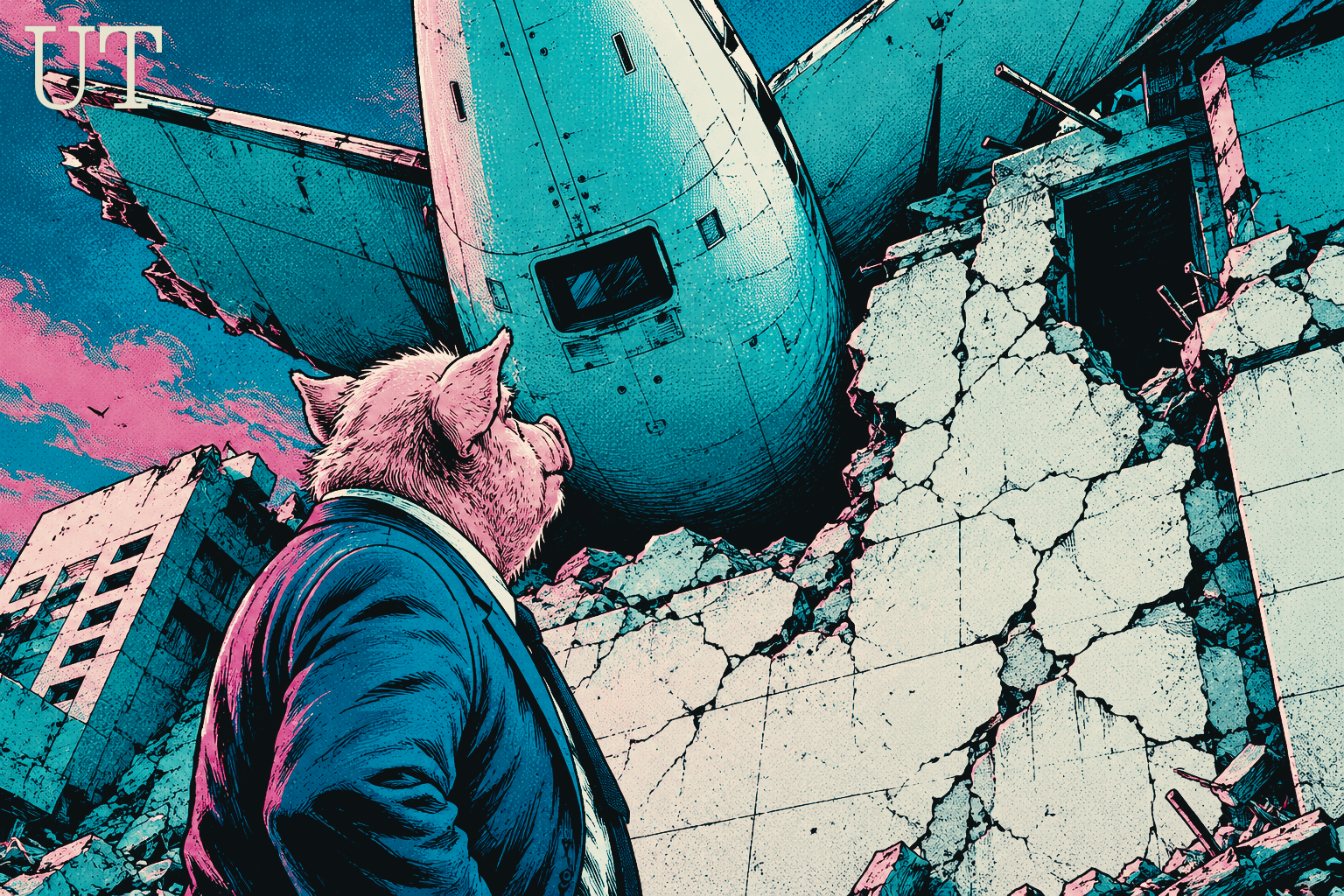
Inspired by Animal Farm by George Orwell.
In a jungle called Tianzhu, many animals lived in grinding poverty, struggling to find food, shelter, and dignity.
One day, a group of pigs arrived with a powerful message. They didn't talk much about poverty or unemployment. Instead, they spoke of something else entirely: 'fear'.
"The foxes are taking over your part of the jungle!" they warned the deer.
"The monkeys are getting special privileges!" they told the rabbits.
"Your traditions, your way of life, your identity-all under threat!" they proclaimed to everyone.
They divided the animals by species, by the parts of the jungle they lived in, by what they ate and how they prayed. They made neighbors suspicious of neighbors. They turned old friends into enemies. And in all this chaos and fear, the animals forgot to ask about their empty stomachs and their suffering children.
The pigs promised to protect each group's "communal rights"-but only if they became rulers.
Desperate and afraid, the animals made them their rulers.
Before the pigs took power, the news reader parrot and crow used to ask important questions: "Why are animals starving?" "Where are the jobs?" "Why are our hospitals failing?"
After the pigs came to power, these journalists only asked trivial questions: "What does the pig leader eat for breakfast?" "What does he do in his free time?" "Isn't his latest speech inspiring?"-questions that meant nothing while animals continued to suffer.
Shantanu, a cunning monkey and close friend of the pig rulers, saw his opportunity. He expanded his small banana-selling business into a vast empire—controlling food distribution, housing, infrastructure, everything.
Then Shantanu bought off the news parrot and crow, along with many other animals in influential positions. Now these journalists would say whatever Shantanu and the pigs told them to say:
- A plane crashes, killing dozens? "The pilot pigeon's fault—poor training!", Also the pig[Ruler] posed for a lovely photo of the plane crash.
- A mine collapses, burying workers alive? "The mine workers' fault—they were careless!"
- Exam papers leaked again and again, destroying young animals' futures? "NO one taking accountability"
- Whenever something went wrong in the country, the pigs and their news channels blamed the past rulers.
Never was it the rulers' responsibility. Never was there any accountability. Never did they mention that safety regulations were ignored, that inspections were skipped, that the pigs' friends cut corners for profit.
Meanwhile, the news parrot and crow broadcast grand announcements: "Jangala is now the fastest-growing jungle in the world!" "Our economy is booming!" "New trees planted, new paths built, development everywhere!" They showed images of Shantanu's gleaming new warehouses, the pigs' luxurious gathering halls, the sparkling fountain in the administrative clearing. But they never showed the animals still starving in the outer parts of the jungle, the crumbling hospitals, the schools with no teachers. And whenever animals grew restless, whenever they began to question why 'they' saw no improvement in their lives, the pigs had a ready solution: 'create a new fear'.
- "The wolves are planning something!"
- "The deer are being too demanding!"
- "We must protect the jungle from 'them'!"
And the animals, divided and afraid, would forget their anger at the rulers and turn it toward each other instead.
Seeing this cycle repeat endlessly, the other animals began to lose all hope in the system. Fear became their constant companion—fear of the "other" animals, fear of speaking up, fear of the rulers themselves.
Meanwhile, animals continued to die—in the fields from starvation, on the roads from neglected infrastructure, in workplaces from lack of safety, in hospitals from absence of medicine-everywhere, the common animals suffered and perished.
Yet the fat pigs kept feeding. The entire wealth of the jungle—the fruit of every animal's labor—flowed into the pigs' association treasure and into Shantanu's coffers. The pigs grew fatter. Shantanu's empire expanded. The news showed charts and numbers going up, up, up.
And still, the news parrot and crow asked: "What inspiring words will the pig leader share today?
And still, the animals fought among themselves over which species was the "real" threat.
And still, behind the grand announcements of development and progress, the jungle called Tianzhu bled.